

2024-04-06 14:11:04
IBM contributes to the advancement of artificial intelligence in Spanish since its origin
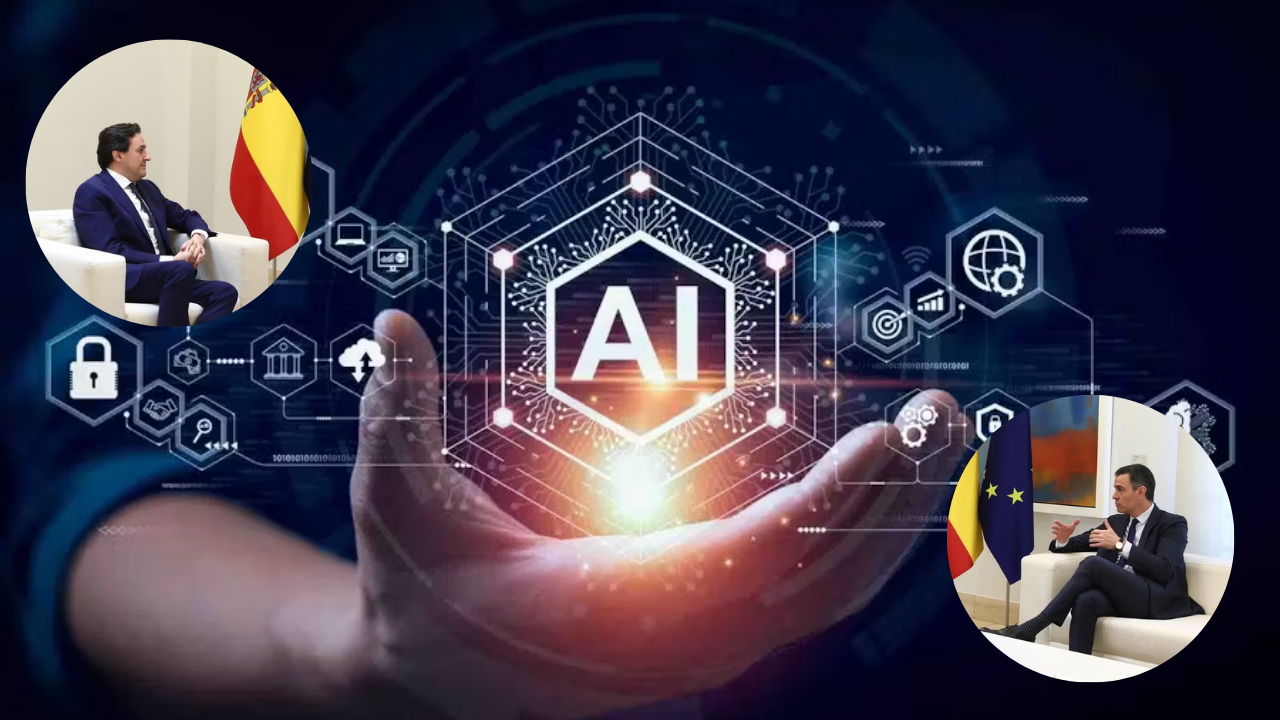
In other words, language is the essential tool that drives human intelligence, enabling communication, understanding of the environment, and the advancement of knowledge. However, until now, artificial intelligence has been mainly limited to English and proprietary programming languages. This has left many people around the world, especially the 500 million Spanish speakers, with limited results and errors in AI translations.
To address this gap, Spain has collaborated with leading companies like Microsoft and, more recently, IBM. These collaborations aim to develop a native Spanish artificial intelligence, which will also include co-official languages. IBM, in particular, is contributing its expertise in artificial intelligence and supercomputing to advance this project, as well as exploring new materials for semiconductors. This joint effort seeks to democratize access to AI and maximize its usefulness for all linguistic communities.
The goal is not only to improve the accuracy of conversational applications for Spanish speakers but also to ensure that artificial intelligence (AI), which can increase business productivity by 30% to 50%, is available to the 500 million Spanish speakers worldwide. This includes small and medium-sized businesses and those with limited knowledge of English.
Moreover, this effort aligns with the idea of achieving "strategic technological sovereignty," a crucial independence in critical sectors of the economy and security, according to the Spanish Minister of Digital Transformation, José Luis Escrivá. AI is seen as a tool that can drive a new industrial revolution, improving productivity in various economic sectors and public services for citizens.
This agreement also aims to facilitate the adoption of efficient digital administration, allowing services such as tax filing or access through voice and text interactions with AI systems. Additionally, AI is expected to be integrated into areas such as healthcare, education, and the judicial system.
On February 19, Brad Smith, president of Microsoft, joined the Spanish government in an unprecedented initiative, increasing the company's investment to more than 1.8 billion euros over two years, the largest investment in its 37 years of presence in Spain. This Friday, Darío Gil, worldwide vice president of IBM and director of research, signed another agreement with the Spanish Prime Minister Pedro Sánchez and José Luis Escrivá to contribute their programming technology, tools, and artificial intelligence infrastructure to this project.
IBM's collaboration will focus on the development of large language models (LLM) and small language models (SLM), similar to those used by platforms like OpenAI's ChatGPT or Google's Gemini. LLMs are complex, with more parameters (trillions), and require costly training, but are essential for complex and creative tasks. SLMs, simpler models, are used for more straightforward solutions and are crucial for improving the efficiency of search engines like Google’s Bert, especially for small and medium-sized businesses and for expanding the AI developer community.
The development of artificial intelligence in Spanish faces the challenge of linguistic diversity among the 500 million users. However, Darío Gil assures that IBM is prepared to address this, emphasizing the ability to train models in different Spanish variants. He highlights that the abundance of Spanish texts facilitates this process and that any deficiencies can be overcome through open collaboration between the Spanish government and IBM.
IBM’s strategy focuses on a collaborative and open approach, compatible with various technologies and accessible to all interested parties. This joint effort aims to benefit the public sector and SMEs, emphasizing its open and transparent nature to ensure its success.
Educational Artificial Intelligence (AI) refers to the use of AI technologies to enhance learning experiences.