

2024-02-20 14:17:46
Brain–computer interface: The Innovative Branch of AI That is Transforming Human Brain Research
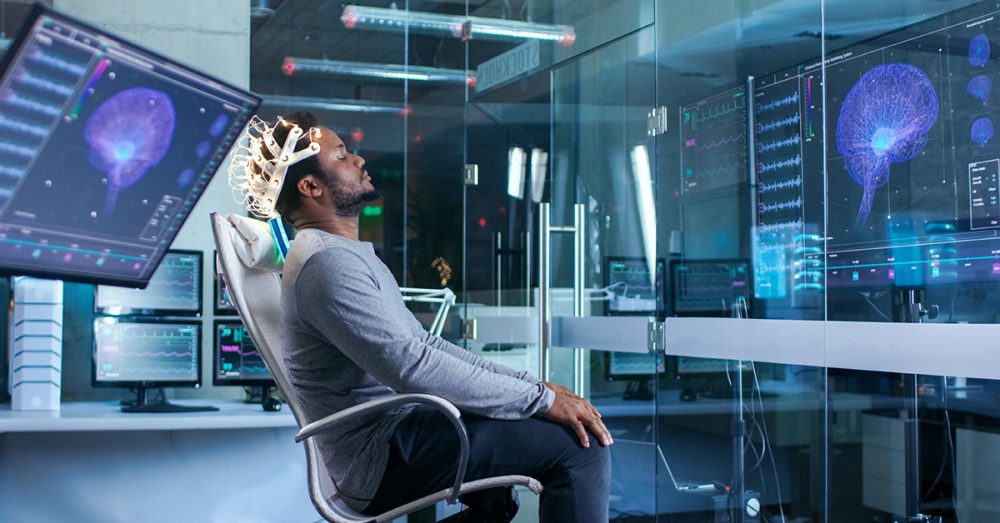
In recent weeks, headlines have been dominated by the human brain. Elon Musk led this trend by announcing the implantation of a chip in this organ, carried out by his company Neuralink. However, this approach is not new, as technology has been targeting the brain for some time, and the key piece of this development lies in the Brain-computer interface (BCI).
Why so much interest in the brain? How do devices like the chip work? Which companies are driving this technological advancement?
Professor Wester Zela, in an interview with El Comercio, explained that BCI is a branch of artificial intelligence that facilitates communication between the brain and the computer. This field has seen significant development in the past two decades, and two years ago, a chip was implanted in the brain of a monkey, demonstrating its effectiveness by playing Pong, a classic video game, with its mind.
The dean of the engineering department at Universidad Científica del Sur explained that the brain is essentially a set of neurons that, through electrical impulses, allows us to think, move, and perform various actions. For many years, the brain has been studied, and today, there is a more advanced understanding of how it works. This has led to the development of devices that can predict human body movements by reading these impulses.
The chip implanted in the human brain is just one of many devices used to record these brain electrical impulses. According to Professor Zela's explanation, the work with artificial intelligence focuses on creating interface models capable of interpreting these impulses. This is achieved through specialized techniques such as Signal Processing, along with Machine Learning.
Reading the brain's electrical impulses, carried out through devices like the implanted chip, has a wide variety of applications. According to Bitbrain, a company specializing in the development of Brain-computer interface (BCI) and neurotechnology, these applications range from rehabilitating lost functions to enhancing our cognitive and physical abilities.
Startups that innovate
Advances in brain research and the development of technologies like Brain-computer interface (BCI) are also part of what is known as neurotechnology, a field that has gained relevance in the medical field. According to Arturo Deza, a professor at UTEC, this is crucial today because one of the most pressing health crises is related to mental health. Thus, BCI technology could offer innovative solutions in this area. Deza highlights that, although it may sound like science fiction, there are already studies from the Massachusetts Institute of Technology (MIT) published in journals like Science, exploring the first interactions of AI-based systems capable of generating images that stimulate or inhibit certain regions of the brain's visual cortex.
Startups play a special role in this development.
Neuralink, owned by Elon Musk, stands out as one of the leading companies dedicated to neurotechnology and the application of Brain-computer interface (BCI). According to a BBVA report, last year it closed a funding round of $280 million after receiving FDA approval to conduct trials of its brain chips on humans.
Another important player in this field is BitBrain, which emerged in 2010 as a spin-off from the University of Zaragoza and has become a pioneer in the application of BCI. Its goal is to develop neurotechnology applications that contribute to improving people's quality of life.
Neuraelectrics is another relevant company dedicated to developing clinical applications for the diagnosis and treatment of brain diseases. Their research focuses on treating disorders such as ADHD, epilepsy, depression, and neurodegenerative diseases like Parkinson's and Alzheimer's.
In addition to the medical field, neurotechnology is also venturing into marketing. According to the BBVA report, Neurocatching is a company exploring this field, using techniques such as eye tracking and facial recognition to measure real consumer behavior and emotions.
Educational Artificial Intelligence (AI) refers to the use of AI technologies to enhance learning experiences.